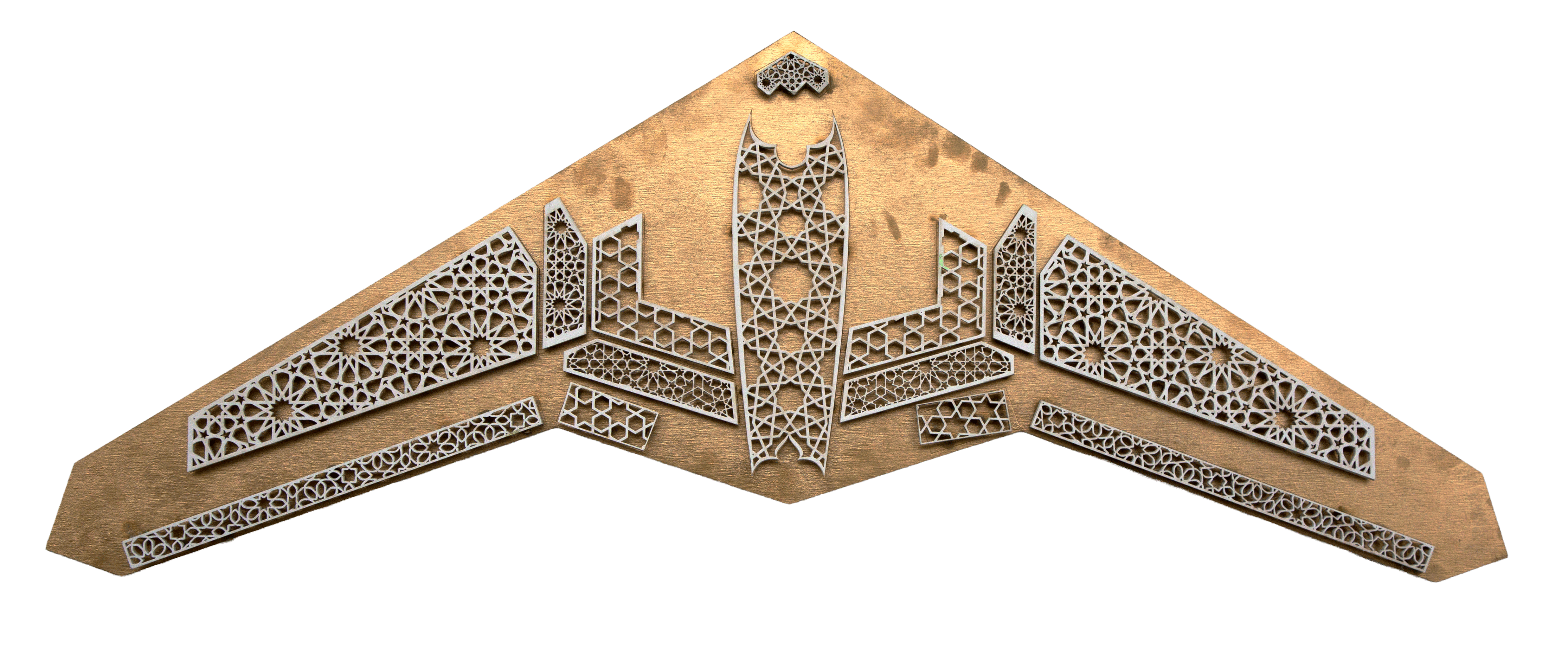
Ascension
Ascension treats flight as a condition: devotional, sovereign, lethal — and almost always belonging to someone else.
I was born in Tehran in 1985, in the closing years of the Iran–Iraq war. My first political vocabulary was aerial: sirens, blackouts, the post-war murals of shahids — martyrs — watching the city from the walls. The series begins in that residue, in what an air raid leaves behind once the event is over, when violence migrates into language, religious imagination, and form.
The sculptures are laser-cut wood, modeled on real aircraft and inscribed with gereh and eslimi — the geometric ornament of our mosques and instruments. They continue a history older than my work. Under the Shah, Iran was the largest foreign buyer of American military aviation; after the embargo, the Iranian Air Force kept those F-14s, Phantoms, and F-5s flying without American parts, repainting and inscribing them, forcing one empire's metal to carry another country's surface. I take that gesture into the studio.
The title comes from salaka — to travel — and from the sālik, the seeker, in Sufi cosmology. In Persian thought the sky is not empty. It is where God is, where Attar's Simorgh lives. Forty years after the sirens of my childhood, that same sky is again crowded with aircraft — Shahed-136s, Hermes and Eitan platforms, MQ-9 Reapers. Shahed, in Persian, also means witness. The series refuses to take a side, not because the question doesn't matter, but because the position of most of us, under any of these aircraft, is the position of civilians whose sky has been organized by people they did not vote for.
پرواز را به خاطر بسپار پرنده مردنی است
— فروغ فرخزاد، «تنها صداست که میماند»
Ascension is a translation: from the steel of the warplane into the wood of the setar, from the iconography of empire into the geometry of ornament. The work an artist can do.


